Independent Living With Mobile Devices & Tablets: 10 Ways Smart Tech Actually Makes Life Easier After 50


Independent living is not about doing everything alone, it is about having enough control, safety, and confidence to live the way you want. Today, about 80% of older Americans already own at least one type of technology that supports living at home, which means most of us are closer to AI‑assisted independence than we realize. In our 50PlusTechBridge community, we see every day how the right mix of AgeTech, AI, and simple digital skills can keep you safer, more connected, and more in charge of your daily life. This guide walks through the best practical uses of mobile devices, and tablets for independent living, with real tools, real examples, and no tech jargon fluff.

Key Takeaways
| Question | Answer |
|---|---|
| How can AI support independent living after 50? | AI helps with fall detection, medication reminders, telehealth, and staying socially connected, all explained in our AgeTech Guide to Technology for Aging Well. |
| Is AI only about health and medical devices? | No, AI also supports learning, hobbies, transportation, and digital confidence, which we cover in Life After 50 in a Digital World. |
| What is the best starting point for someone who feels unsure about technology? | Begin with core skills and your phone or tablet, using step‑by‑step support like our Foundations: Digital Skills course. |
| How do mobile devices tie into AI and medical care? | Smartphones and tablets are now gateways to telehealth and AI‑driven wellness apps, and we walk through that in the free Using Mobile Devices for Medical Services course. |
| Where can I find more stories and tools about AgeTech and AI for independence? | Our curated AgeTech archives collect guides on devices, apps, and real community experiences. |
| How can I keep up with health and wellness technology that supports living at home? | We track new tools in our Health & Wellness Technology section, with straightforward breakdowns of benefits and risks. |
| What is 50PlusTechBridge actually doing to support independent living? | We combine training, community, and practical tech guidance, described in How 50PlusTechBridge Is Helping Redefine Independent Living. |
1. What We Really Mean By “Independent Living” With AI
When we talk about independent living in our 50PlusTechBridge community, we are talking about your ability to manage your day, your health, and your relationships on your terms. AI is not here to take over your life, it is here to quietly handle the boring or stressful parts like reminders, monitoring, and coordination, so you can focus on the parts you enjoy.
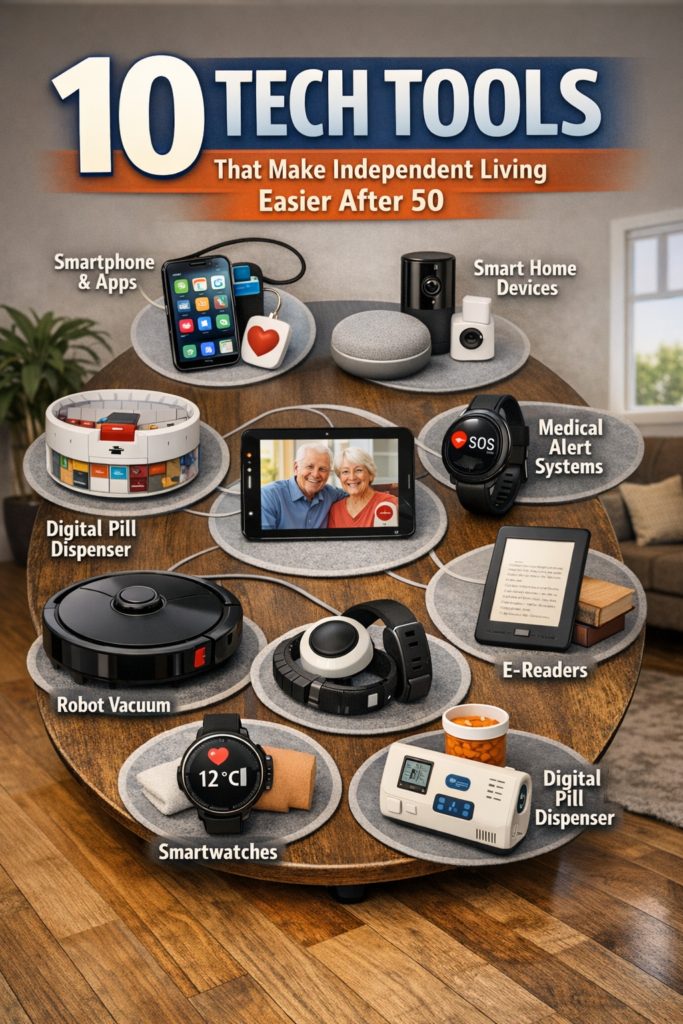
In practice, AI for independent living includes tools like fall‑detection cameras, telehealth platforms, voice assistants, and smartwatches. These work together to form what AgeTech experts call a “supportive ecosystem” around you, especially if you prefer to age in place rather than move into a traditional facility.

2. AgeTech Basics: How AI Fits Into Everyday Life After 50
AgeTech simply means technology designed around the needs and goals of people in midlife and later years. Our AgeTech Guide: Technology for Aging Well shows that AI now touches everything from medication reminders to home safety and social connection.
The most helpful AI tools are often the ones that feel almost invisible in daily use. For example, your phone camera can support telemedicine, your watch can monitor heart rate in the background, and smart sensors in the home can quietly signal if something seems off with your usual routine.

3. Phones, Tablets, And AI: Your Everyday Independence Toolkit
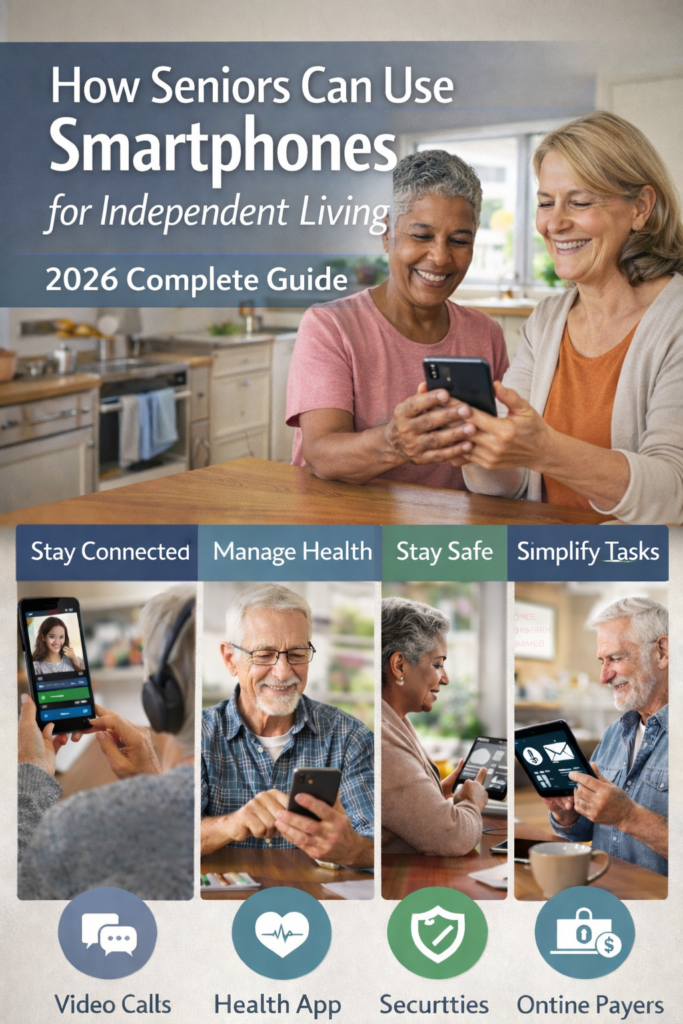
Smartphones and tablets are the core devices for independent living with AI because they already sit in your pocket or on your coffee table. Our community data matches national trends showing that most adults 50+ now use a mobile device daily, and your phone is far more powerful than it was even five years ago in terms of battery, processing, and camera quality.
On top of that hardware, AI‑powered apps can manage medication schedules, guide exercises, translate medical terms, and even summarize long documents from your doctor. In our free Using Mobile Devices for Medical Services course, we walk through real examples like video appointments, sending lab results, and setting up secure health portals on your device.

| AI feature on your phone/tablet | How it supports independent living |
|---|---|
| Voice assistants (Siri, Google Assistant, Alexa app) | Hands‑free calls, reminders, and quick answers without typing. |
| Telehealth apps | Video visits and messaging with doctors from home. |
| Health monitoring apps | Track heart rate, sleep, activity, and share trends with providers. |
| AI note and summary tools | Summarize long medical notes or insurance documents into simple language. |
Did You Know?
89% of older adults rank aging-in-place as important when deciding which technologies to adopt, which is exactly where AI-powered tools can make the biggest difference.
4. AI For Safety: Fall Detection, Alerts, And Emergency Help
Safety is usually the first thing families ask us about. They want reassurance that someone will know if a loved one falls, misses a medication, or does not respond to calls. AI has made safety devices far more accurate and far less intrusive than the “red button” pendants many people remember.
We now see options like AI‑powered fall‑detection cameras that monitor movement patterns and can distinguish a real fall from something harmless. In clinical studies, AI‑enabled multimodal monitoring, combining wearables and home sensors, reached fall‑detection sensitivity around 94.8% and specificity around 96.2%, which is a serious upgrade over older basic sensors that triggered many false alarms.

- Camera‑based AI monitoring can detect falls without a wearable device.
- Smartwatches with fall detection can automatically call or text emergency contacts.
- AI pattern analysis can flag changes in movement or sleep that might indicate risks before an incident happens.
5. Telehealth And AI: Seeing Your Doctor Without Leaving Home
Telehealth is one of the clearest success stories for independent living with AI. You can now handle many follow‑ups, medication checks, and even urgent questions from your living room, using your phone, tablet, or computer. AI supports this by improving video quality, transcribing visits, and helping clinicians quickly review your history.
Our Using Mobile Devices for Medical Services course is free and designed specifically for 50+ learners. We show how to download apps, handle check‑ins, test your camera and microphone, and feel confident before clicking “Join visit”.
Tip from our trainers: Test your telehealth app the day before, not five minutes before the appointment. AI can help with video and audio, but only if everything is installed and logged in.
6. Wellness AI: Daily Routines, Exercise, And Mental Health
Independent living is not just about reacting to emergencies, it is about keeping your body and mind in good shape every day. Wellness AI tools can guide your stretches, track walks, encourage hydration, and even suggest breathing exercises when stress is high. Many of these tools live inside devices you already own.
On our About page we talk about redefining independent living through movement, connection, and education. AI‑driven wellness features, like automatic exercise tracking and personalized suggestions, make it easier to keep those habits going without constant manual logging or complicated settings.

- Smartwatches can track steps, heart rate, and sleep, then use AI to spot trends.
- Meditation and mental fitness apps can adjust sessions based on how you respond.
- Nutrition apps can scan labels and nudge you towards choices that fit your goals.
Did You Know?
70% of adults aged 50+ say they feel very comfortable using technology to age in place, which means confidence is no longer the exception, it is becoming the norm.
7. Beating Loneliness: AI Companions, Calls, And Community
One of the hardest parts of independent living can be feeling like you are on your own too much. AI can never replace real human relationships, but it can make it easier to stay in touch and to find new communities that fit your interests and pace. That is a big reason we created the 50PlusTechBridge community in the first place.
Video calling platforms, simple messaging apps, and even AI chat companions can help fill long quiet stretches. On our Life After 50 in a Digital World page, we talk about how technology supports not only safety but also daily connection with family, grandkids, and peers who share your hobbies.
- Group video chats with friends or support groups.
- Shared photo albums with grandchildren using simple apps.
- AI‑assisted language tools to send messages and understand replies, even when you type slowly or prefer voice.
8. Learning The Tech: Courses, Guides, And Support For 50+
We know many of you did not grow up with smartphones in your hands, and that is okay. Independent living with AI is not about being a “tech person”, it is about learning a series of small, specific skills that fit your life. Our job at 50PlusTechBridge is to make that learning practical and judgment‑free.
We offer structured courses like Foundations: Digital Skills and targeted guides in our blog. These walk through topics such as creating strong passwords, joining video calls, installing trusted apps, and using AI features without giving up your privacy.

Our promise: We design every course and guide with 50+ learners in mind, so you never have to feel like the technology was made for someone else first.
9. Smart Homes And AI: From Lights To Security
Smart home AI used to sound like science fiction, but today it often just means giving your voice assistant simple jobs around the house. You can control lights, thermostats, locks, and security cameras without getting up or fiddling with tiny buttons. For independent living, this can reduce falls, save energy, and lower stress.
In our AgeTech archives, we highlight practical smart home setups: one room at a time, starting with the areas where you spend the most time. For example, smart bulbs in the hallway that turn on automatically at night, or a doorbell camera that lets you see visitors from your chair.
| Smart home AI feature | Benefit for independent living |
|---|---|
| Voice‑controlled lights | No need to cross a dark room or reach for switches. |
| Smart thermostat | Stable, comfortable temperatures and lower bills. |
| Connected doorbell and locks | See and speak to visitors without opening the door immediately. |
10. Privacy, Trust, And Choosing AI Tools Wisely
We will be honest, not every AI product on the market puts your interests first. Privacy, data security, and clear control are non‑negotiable for independent living. Our role is to help you understand what data a device collects, who sees it, and how to adjust settings so you stay in charge.
When we evaluate tools on 50PlusTechBridge and in our news feed, we focus on transparency and control. We look for products that explain, in simple language, what they do with your information and that give you realistic options to turn features on or off without breaking the whole system.
- Always create your own account rather than letting someone else control login details.
- Review privacy settings at setup and once a year after that.
- Prefer tools that let you download or delete your data without hassle.
11. How 50PlusTechBridge Is Redefining Independent Living With AI
At 50PlusTechBridge, we are not just commenting on AI and independent living from the sidelines, we are building a community and education series to help you actually use this technology day to day. Our article on how we are helping redefine independent living explains how we combine courses, group discussions, and hands‑on support.
We listen closely to what our members tell us they need most: confidence, clear instructions, and tools that respect their independence. Then we shape our guides, like Life After 50 in a Digital World, around those real questions instead of assuming one‑size‑fits‑all.
| What we provide | How it supports independent living |
|---|---|
| Courses and workshops | Teach you to use AI tools confidently and safely. |
| Community discussions and forums | Let you learn from peers facing the same questions. |
| Guides and articles | Break down complex technology into clear, actionable steps. |
Conclusion
Independent living with AI is not a distant future, it is happening right now in the phones, watches, cameras, and apps that many of us already own. The key is understanding how to put those pieces together in a way that supports your safety, health, and relationships without making you feel watched or overwhelmed.
As a 50PlusTechBridge community, we are committed to standing beside you as you explore these tools, ask hard questions, and decide what truly fits your life. If you are ready to dig deeper, start with our AgeTech Guide, then pick one small step, like joining a telehealth visit or setting up a simple smart home routine. Independence is not about doing everything yourself, it is about using every resource available, including AI, to live your way with confidence.